RXT Commitment Schema Retroactive to Database
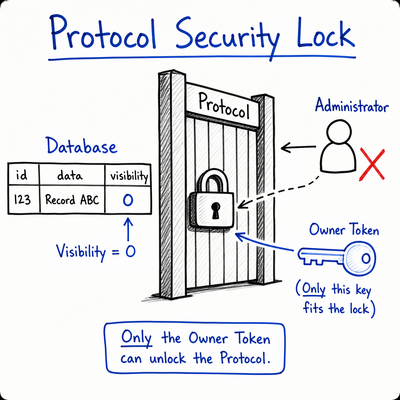
Secured / No Access • Visibility = 0
I. Guarantee of Security
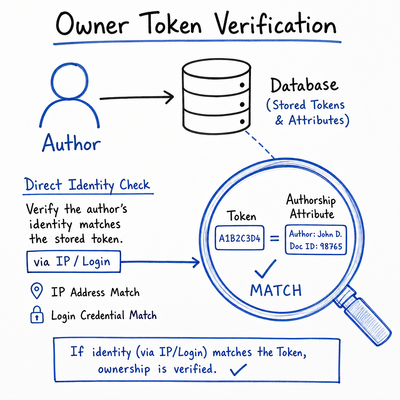
The protocol enforces a hardened retrieval constraint for records marked Visibility = 0, bypassing standard database administrative access. Security is maintained through NOTU: Notary Organization Traditional UserAuthor, which requires a validated authorship, digital fingerprints, and record metadata. The system prevents unauthorized access by requiring a direct, authenticated handshake for attribute retrieval, ensuring that encoded storage cannot be decrypted through raw data copying or administrative overrides.
II. Authorship Trust of Privacy
Privacy is secured by a 100% authorship bind, linking record access exclusively to the author's unique Owner's Token. Identity is verified in real-time by comparing active session data (IP/Login) against the record's secure attributes. This architecture ensures a private data handoff that no third party, server, or administrator can intercept. Access is strictly restricted to the original author, guaranteeing that private records remain unreadable to all other entities.
Introducing The Loaf
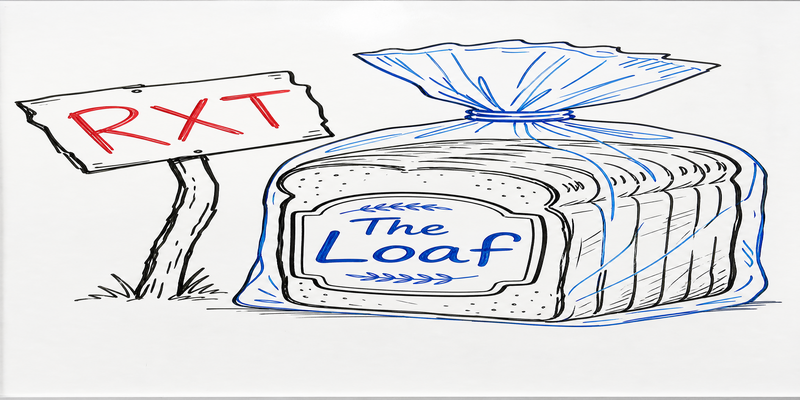
Forget "round trip." Forget "encode-decode cycle." The protocol world has a new favorite word, and it came from a typo: the loaf. Slice into it and you'll find RXT sitting at the center, quietly turning a string of text into something sliced, stored, fingerprinted, and handed back whole — the technological equivalent of bread coming out of the oven, getting cut, and somehow still being one loaf.
The metaphor isn't decoration. It's structural. A loaf gets sliced in sequence — first piece, then the next, then the next — and that's exactly how RXT moves a string through encode, into the database, and back out through decode. No skipped slices. No reordering. No surprises in the middle. That sequencing is the whole point: it's what makes the system legible to an auditor and intuitive to a stranger on the internet who has never heard the word "fingerprint hash" in their life.
Tech has a long, mixed history of borrowing food for infrastructure — cookies, breadcrumbs, spaghetti code — but most of those terms describe a mess. The loaf describes the opposite: order, integrity, a thing you can trust precisely because you can watch it being made, slice by slice. RXT didn't market this term into existence. It survived an accident, got repeated enough times to become real, and now does more explanatory work than a paragraph of protocol documentation ever could.
That's the tell of language built for the public, not just the whitepaper: it doesn't need a glossary. Run the loaf, and you've run the whole protocol — start to finish, slice to slice, intact. If RXT is the proof, the loaf is the pitch.
Record Information, Stats, and Feedback
I. Fingerprint
The Fingerprint [ fp:{org}:rxt:3ct57ed78ij08a ] identifies your record and provides a unique URL address for the article. It serves as a custom resolver where the fingerprint equals the domain database, the RXT format, and a unique identifier. This fingerprint is the primary asset you should share. As determined by our practice, the fingerprint carries significant asset value: (1) it is a paid-for resource; (2) it applies Intellectual Property (IP) and Authorship Rights; (3) the content is a resource and an asset of publication or an executable; and (4) it is a legally registered document. Our RXT system generates this fingerprint and prevents forgery, duplication, or replication across twelve distinct prevention cases, ensuring the integrity of every record.
II. Document Title
You select a Title for your document. If your document includes a Title on the first line of text, the system will automatically detect and utilize that Title.
III. Keywords and Description
You may choose keywords or a description (up to 500 characters) related to your document. This is critical because your document is encoded and unreadable; search engines will locate it via these keywords. If you believe a description is better suited to summarize and label your work, you may provide a description instead of keywords. If you leave the keywords field blank, the system will scan your document and automatically generate keywords for you.
IV. Evo-kw Keywords
A document can begin with an evo-kw. These represent categories of general purpose specific to a given subject. Many topics fit these categories, which classify significant information and assist in organizing various subjects into a directory. They also possess dynamic functions, such as HTML pages, templates, AI prompts, advertisements, reviews, and more. Numerous categories are available for your review. This is considered an asset—information of value attached to your record. It is more than a simple tag; once you begin using evo-kw, its purpose becomes clear. It is readable, displayable, and searchable.
V. Pageviews
We log every instance a visitor views your record and provide these pageview statistics directly to you.
VI. Comments
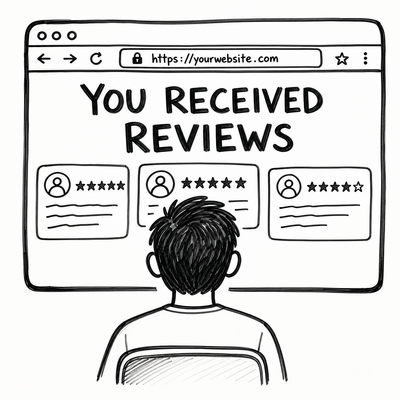
Comments are handled uniquely. When you post an article to a website or forum, you may receive comments from visitors in a public thread. Within RXT, each record is public, allowing viewers the option to leave feedback. However, we do not make these comments public by default; you do. By installing the application, comments are received like instant messages—delivered directly to the author. Since you wrote the content, feedback goes straight to you whenever the app is active. For each comment received, you maintain the option to "Post," which saves the comment and makes it public within a thread.
VII. Inconsistency Remarks
These remarks are designed for critique. Once an article is published and reviewed by the public, it undergoes rigorous evaluation. This is not a "Yes, boss" system; where a record lacks facts, misses information, or is conceptually unbalanced, Inconsistency Remarks provide the public with that information. The author receives this feedback to further advance their work through critical review, as public knowledge is rooted in understanding.
VIII. Prior Rights Established
If you create a notary record from an already authorized work by an author, the entry has Prior Rights, and you must credit the original author. Your notary entry is a record stating that you have interacted with or read this work, and it does not claim ownership rights. It is a legitimate entry—a round article that provides credit to the original author. While you are not the rights holder, you become a creative work guardian once you create that record; anything related to that work is yours to oversee.
IX. Preferred Domain
Your fingerprint represents your record. If your record is displayed on your own website, you may specify which domain is hosting it. If you are using our link, we track those views accordingly. Should the record be shared or posted in other locations, the script will direct external traffic with a notification stating that the Author has cited the { preferred website } as the original source. This redirects visitors to the preferred website to view the article and leave comments, ensuring traffic is consolidated at your chosen domain.